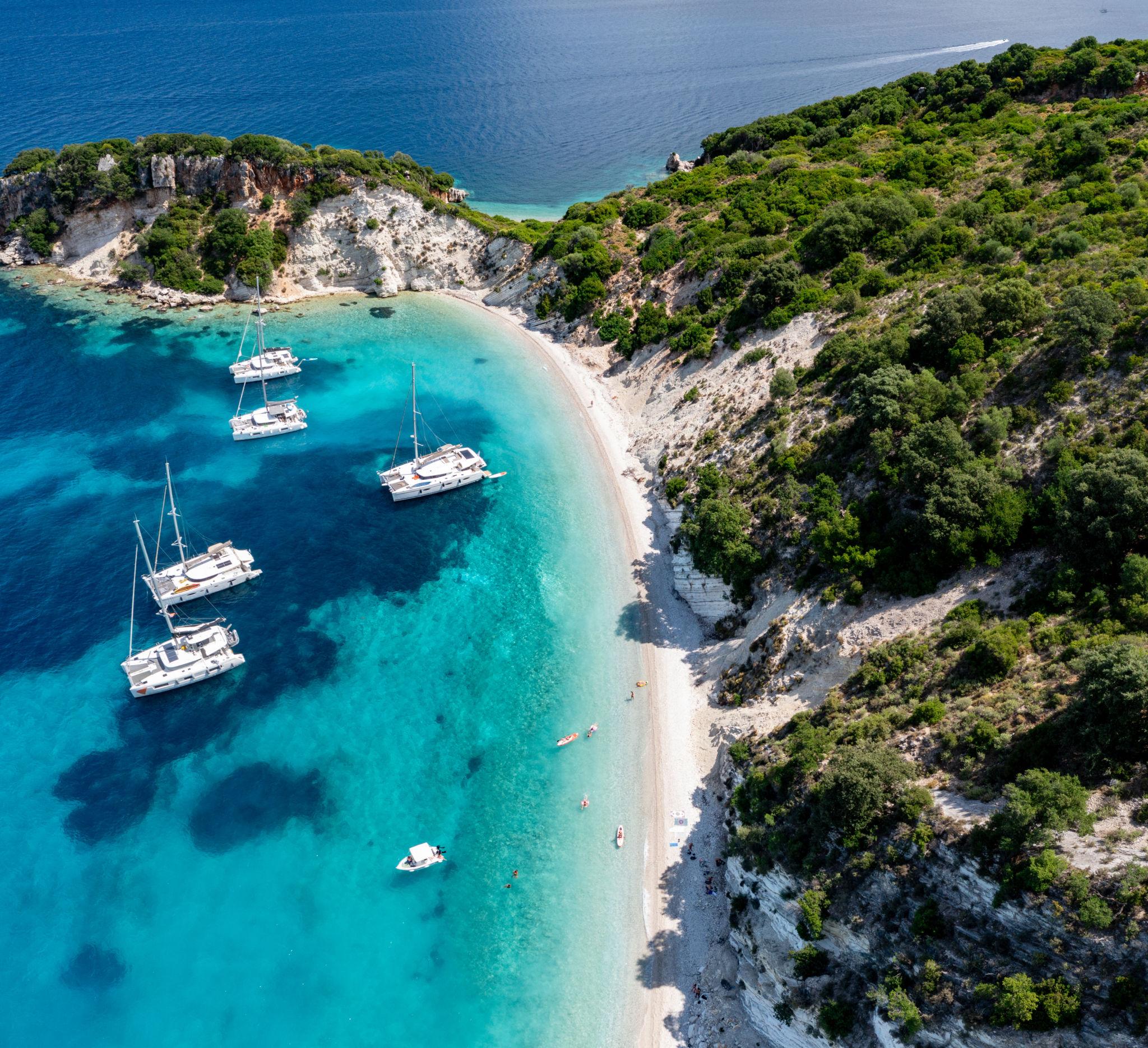
Gidaki beach, Ithaca — turquoise cove accessible only by boat, with sailboats anchored offshore
Greece · Ionian Islands

Ithaca
hope the voyage is a long one

Things to do

A cave where Odysseus hid the gifts of the gods. A monastery at 600 metres. A beach reachable only by boat. A Mycenaean hilltop that may actually be the Palace of Odysseus.

Most beautifulKioni village
Best beachGidaki (by boat)
Best mythologyPilikata hill
Best viewsKathara Monastery
07

Things to do
in Ithaca

Village

Vathy — the capital in its bay

The capital of Ithaca sits at the end of a long, sheltered bay ringed by hills. The architecture is Ionian–Venetian: colourful houses with tiled roofs built around the bay, a seafront promenade of tavernas and cafes, the little islet of Lazareto at the harbour entrance with its 17th-century church. The Archaeological and Ethnographical Museum is small and serious; it is said that one of the earliest works of El Greco may be found in the cathedral. Walk the promenade in the evening and eat somewhere with a view of the yachts.

Village

Kioni — the most beautiful village in the Ionian

Stone houses with patios full of bougainvillea descending amphitheatrically to a sheltered bay. Tables at the waterfront restaurants placed so close to the sea that the boats are almost within reach. Three old windmills on the hillside above. A listed fishing village that has maintained its character despite its beauty because Ithaca itself has maintained its character despite the world knowing the name. Come for a day. Stay for a week. Arrive by sailboat if you possibly can — the entrance to Kioni bay is one of the finest arrivals in the Ionian.

Best at sunrise or in the evening. The middle of the day belongs to the boats.

Beach

Gidaki — the beach you reach by boat

The most beautiful beach on Ithaca and one of the most beautiful in Greece — a sheltered cove of extraordinarily clear water, accessible only by boat from the port of Vathy (15–20 minutes) or by a demanding hiking trail that the locals use and most visitors are advised against. Water taxis run regularly in season from Vathy. Arrive early; it has no facilities and no shade beyond the rocks. The clarity of the water here has to be seen to be understood — photographs consistently underrepresent it.

May–October. Water taxi from Vathy port. Go early.

Mythology

Cave of the Nymphs — Odysseus’s hiding place

A cave above Dexia Bay on the southern peninsula of Ithaca, identified since antiquity as the cave where Odysseus hid the gifts given to him by the Phaeacians — the bronze tripods, the golden cups, the bolts of fine fabric that Nausicaa’s people loaded on his ship before the final leg home. The identification is as plausible as any in Homeric archaeology. The cave itself is beautiful: stalactites, stalagmites, and a quality of light that makes the mythology feel less like story and more like geography.

History

Pilikata hill — the Palace of Odysseus

Above the village of Stavros in the north of the island, Pilikata hill was identified in the 19th century as the likely site of the Palace of Odysseus. Mycenaean artefacts have been excavated here; finds are displayed in a small museum in Stavros itself. A model of the palace stands in the village square. Whether or not this is the actual palace — and the scholarly debate continues — the hill has been understood as Odysseus’s home since antiquity, and standing on it above the three bays that Homer describes is a genuinely affecting experience.

Outdoors

Kathara Monastery — 600 metres above the sea

The Monastery of Panagia Kathariotissa stands at the highest point of Ithaca — 600 metres above sea level, in the centre of the island, with panoramic views of the Ionian Sea in every direction: Kefalonia to the west, Lefkada to the north, the Greek mainland visible on clear days. The monastery has been standing since 1696 and is the patron saint’s home. Its feast day on 8 September brings the island together; the rest of the year it is quiet and rarely crowded. The narrow road to reach it is an adventure in itself.

Open daily. Feast day 8 September — book accommodation early if visiting then.