Unfamous Places recommends
The island everyone knows by name. The island almost nobody visits. Four kilometres from Kefalonia. A thousand years of mythology. A handful of tavernas. No crowds.
The name Ithaca is known to anyone who has read Homer, studied classical mythology, or encountered the Cavafy poem. The island itself is known to almost nobody. Separated from Kefalonia by four kilometres of water — Kefalonia, which absorbs almost all Ionian tourist traffic — Ithaca sits quietly, visited mostly by Greeks and a small number of sailors who know exactly what they are coming for. The roads have almost no traffic. The tavernas are full of locals.
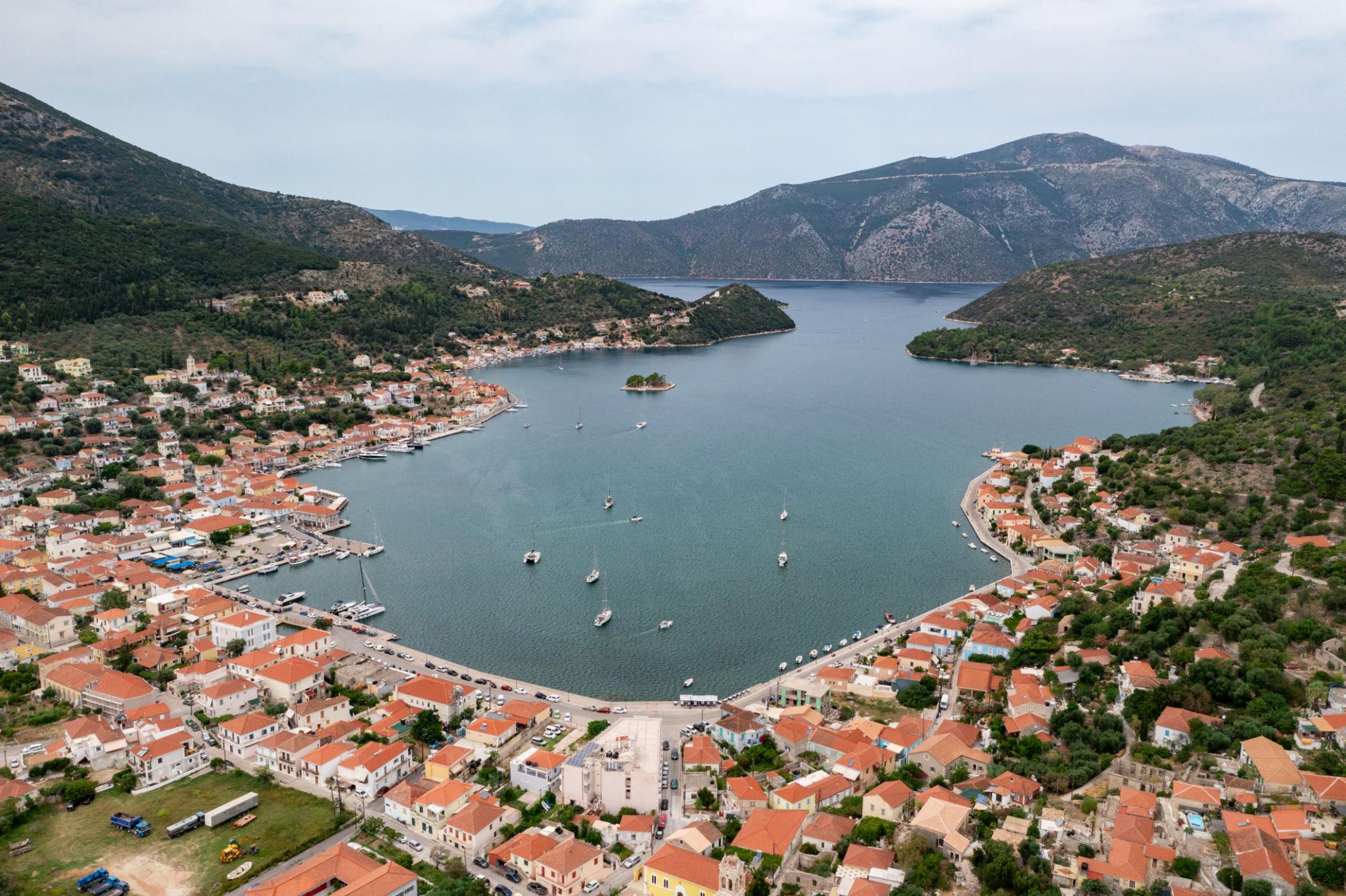
The village of Kioni on the north-east coast is a listed settlement: stone houses with patios full of bougainvillea descending amphitheatrically to a sheltered bay, three old windmills on the hillside above, tables at the waterfront tavernas placed so close to the sea that the boats are almost within reach. It is the kind of village that makes people question the decisions they have made about where to live. Arrive by sailboat if you possibly can.
The Palace of Odysseus, the Cave of the Nymphs, the hill where he is said to have returned — these are not theme park attractions. They are hills and caves that have been identified with the Odyssey since antiquity and are as likely to be genuine as any ancient attribution gets. Walking to Pilikata hill above Stavros, where Mycenaean artefacts have been excavated and a model of the palace stands in the village square, is a genuinely strange and moving experience.
Ithaca is 96 square kilometres of olive groves, cypress trees, and steep limestone hills dropping to the Ionian Sea. Its beaches are small, stony, and extraordinarily clear. Gidaki, accessible only by boat, is among the most beautiful in Greece. The island has one road running north–south, a handful of villages, and no resort development to speak of. It remains exactly what it has always been.
April and May. Green, quiet, warm enough to swim by late May. The island at its most wildflower-covered. Almost no other visitors.
Warm, clear, the sea swimmable, tavernas open, and the July–August crowds entirely absent. The ideal month.
Busiest months — busy by Ithacan standards, which means you will share the island with Greeks on holiday. Still far quieter than anywhere in the Cyclades.
Warm sea, golden light, empty roads, and the locals breathing again. The finest month. Everything is open until mid-October.
Kefalonia Airport (EFL) has direct seasonal flights from London, Manchester, and other European cities. From the airport, take a taxi to the port at Poros and board the ferry to Ithaca. The crossing takes 30–45 minutes. Total transfer: around 1 hour 30 minutes.
Ferries run from Poros (Kefalonia) to Pisaetos and Vathy (Ithaca) several times daily in season. There are also connections from Frikes (north Ithaca) to Lefkada and Fiskardo (Kefalonia). Check ionian-ferries.gr for current schedules, which change seasonally.
Direct ferry connections from the mainland ports of Astakos (western Greece) and Kyllini (Peloponnese) to Pisaetos, Ithaca. A hire car is useful on the island but not essential if you base yourself in Vathy. The single north–south road connects all villages.
There are no direct flights to Ithaca. The island has no airport and no plans for one. This is part of what has kept it as it is. Kefalonia is the gateway; the 30-minute ferry crossing is part of the arrival experience.
The large Ionian island four kilometres away — dramatic limestone mountains, the Melissani cave lake, Fiskardo’s Venetian harbour, and beaches (Myrtos especially) that deserve their reputation. The main gateway to Ithaca and well worth several days on its own.
The only Ionian island connected to the mainland by a causeway — Porto Katsiki is one of the finest beaches in Greece, and the island has a sailing culture and a taverna scene that punches well above its weight. Less visited than Corfu, more accessible than Ithaca.
A tiny island off Lefkada with three villages, no resort development, and some of the clearest water in the Ionian. Reached by small ferry from Nidri. The kind of island Ithaca might have been if Kefalonia hadn’t been so close.
The smallest inhabited island in the Ionian — 5,000 olive trees, a handful of restaurants, and the turquoise lagoons of Antipaxos an hour’s boat ride south of Corfu. The most fashionable quiet island in Greece and the hardest to reach without planning.
The sanctuary of Zeus on the Peloponnese mainland — birthplace of the Olympic Games, an extraordinary archaeological site, and less than two hours by car and ferry from Kyllini. Often combined with the mainland port crossing to Ithaca.
South of Kefalonia — Navagio (Shipwreck Beach) is genuinely one of the most photographed places on earth, and the island’s sea turtles are a serious wildlife encounter. More developed than Ithaca but the landscape is dramatic enough to justify the crowds.