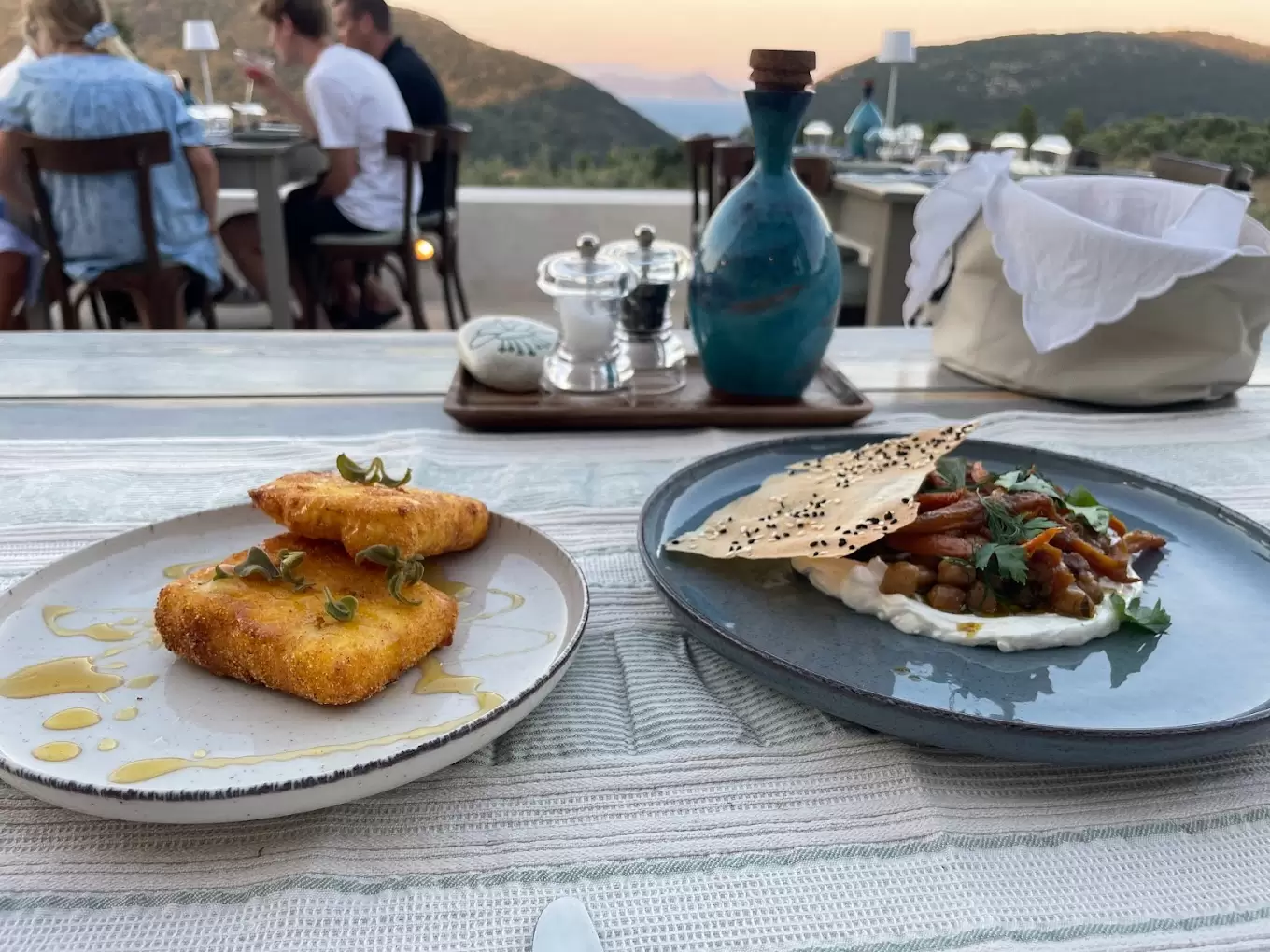
Ithaca eats simply and very well. The fish comes from the Ionian Sea; the vegetables from kitchen gardens behind the villages; the olive oil from the island’s own trees, which produce a small quantity of exceptional cold-pressed oil. The dishes to look for are savoro (fish marinated in vinegar, rosemary, and raisins — a Venetian legacy), grilled local fish, shrimp pasta, and the slow-cooked meat dishes (goat, lamb) that appear on almost every traditional menu. The wine is Greek and the house wine in a good Ithacan taverna is perfectly decent. Order it in a ceramic jug.
Best on Island
Taverna Kanenas
Consistently the best taverna in Ithaca · Stavros · Garden terrace
The restaurant that comes up in every serious discussion of eating on Ithaca. The name means ‘nobody’ in Greek — a modest name for a place that delivers the best cooking on the island. Set in Stavros in the north, with a shaded back terrace next to an aromatic herb and vegetable garden — you may see the chef step out to pick the tomato you are about to eat. Organic and local wherever possible; olive oil from the restaurant’s own trees. Thursday cooking classes (Ambrosia with Katy, 50 euros, lunch included) for those who want to learn the recipes. Book ahead in July and August.
kanenasithaki.com · Stavros · t: +30 26740 31 777
Local Gem
Tsirimpis
Loutsa beach, near Vathy · Traditional Ithacan
On Loutsa beach a short drive from Vathy — the kind of taverna that exists only in places where nobody is trying to impress anyone. The shrimp pasta is the dish most talked about: simple, fresh, exactly right. The grilled fish stuffed with garlic is equally good. Tables directly above the water. The sunset from the terrace is free.
Loutsa Beach, near Vathy · No website — a taverna that does not need one
Frikes
Ageri
Port of Frikes · Waterfront tables · Modern Greek
At the tiny port of Frikes in the north of the island, right on the bayside with views of the water and the two windmills. Ageri is a step beyond the standard taverna — owner and chef Vassilis Periharos brings modern variations on traditional Greek dishes using fresh local produce, all made on the premises. Sea bream, linguine with seafood, local lamb chops, moussaka with smoked béchamel. Watch the yachts sail by and the fishing boats come in while you eat. Seats up to 80; available for private events.
ageri-ithaca.com · Frikes bay · t: +30 26740 31465
Traditional
To Trehantiri
Traditional taverna · Slow-cooked dishes · Vathy
A traditional taverna with specialities in slow-cooked food rather than the grilled fish that dominates most menus: goat on the grill, moussaka, briam (the Greek vegetable bake), local greens, and — the dish to specifically seek out — savoro, the Venetian-influenced marinated fish with vinegar and raisins that is a signature of Ithacan cooking. The kind of restaurant that does not change because it has no reason to.
Vathy, Ithaca · No standalone website — ask at your hotel for directions
Drinks
Spavento Café Bar
Kioni waterfront · Cocktails & sunsets
The place in Kioni for a cocktail or aperitif as the sun goes down behind the hills. Spavento sits at the waterfront of Ithaca’s most beautiful village — stone houses with bougainvillea, boats in the sheltered bay, the three windmills on the hillside above. The drinks are good; the setting is extraordinary. Come for the hour before dinner and stay for the light.
Kioni waterfront, Ithaca · No standalone website — find it at the harbour
On drink
Greek wine, Ionian olive oil, and the ceramic jug
Ithaca produces a small quantity of its own olive oil — cold-pressed from the island’s ancient trees, extraordinarily good, and available to take home from a handful of producers. The wine served in Ithacan tavernas is Greek throughout: ask for local Ionian white wines (Robola from Kefalonia is the benchmark of the archipelago) or order the house wine in a ceramic jug and expect something perfectly decent. The island produces no wine of its own but the proximity to Kefalonia’s Robola estates means the local wine lists are better than most Greek islands their size.