Culture
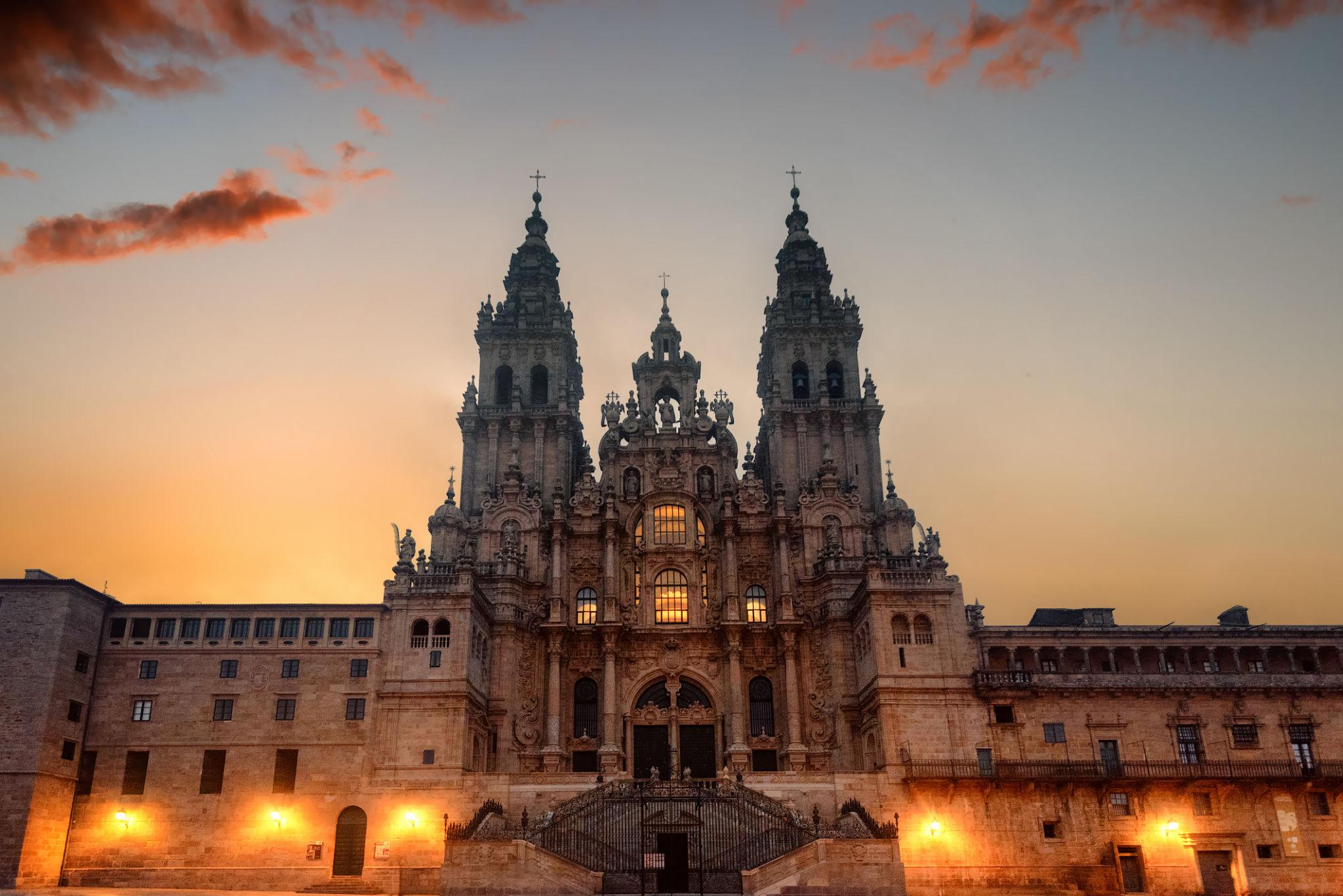
Praza do Obradoiro — the most emotional square in Spain
The Cathedral of Santiago de Compostela faces the Praza do Obradoiro on one side; the Parador on the other; the old university and the city hall complete the square. The Baroque façade of the cathedral — built between 1738 and 1750 by Fernando de Casas Novoa — is one of the great pieces of European architecture. But the experience of being in the square when a group of pilgrims arrives — walking in exhausted, weeping, embracing strangers who have walked the same path — is something that belongs to no specific religion and is available to anyone who is present. Go at dawn before the tour groups arrive. Go again at midday when the pilgrims come. Go at dusk when the façade turns gold.
Nature
Cíes Islands — the national park that requires a permit
Three islands at the mouth of the Ría de Vigo, forming part of the Atlantic Islands of Galicia National Park — accessible only by ferry from Vigo, and only with a daily visitor permit (limited to 2,200 people per day). The beach between the two main islands — Playa de Rodas — was voted the best beach in the world by The Guardian in 2007. The water is the clearest on the Galician coast; the walking trails across the islands take in cliffs, lighthouse, and nesting colonies of yellow-legged gulls. The permit system means it is never crowded. Book your ferry and permit weeks in advance in July and August.
National Park permits →
Ferries from Vigo, May–September. Permits required July–September.
Food
Mercado de Abastos — the finest fish market in Spain
The covered market of Santiago de Compostela — second only to the cathedral in the city’s list of essential experiences. Three halls of fish and shellfish from the Rías, with eyes so clear and gills so red that the quality is immediately visible. Razor clams, lobsters, percebes, clams, sardines, and a dozen other species on stainless steel counters. You can buy your fish at a stall and have it cooked at an adjacent restaurant. The market operates from early morning; the serious business is done by 10am. Go before breakfast and have coffee and empanada inside.
Open Tuesday–Sunday mornings. Best Tuesday, Thursday, Saturday.
Culture
Combarro — the village of stone granaries on stilts
A fishing village on the Ría de Pontevedra with the highest concentration of hórreos (the traditional Galician stone granaries on stilts, designed to keep grain dry and rat-free) of any coastal village in Galicia — more than 30 of them lining the waterfront, their cruciform finials silhouetted against the ría. One of the most photographed villages in Spain; and genuinely beautiful in the early morning before the day-trippers from Pontevedra arrive. Walk the waterfront at 8am and return by 10am. Combine with a visit to Combarro’s small church and the old stone streets behind the seafront.
Wine
Albaríño wine estates — Cambados and the Salnes valley
The Salnes valley around Cambados is the heart of Albaríño production — a landscape of granite walls, elevated vine pergolas, and family-run estates producing some of the finest white wine in Spain. Most of the major producers offer tastings and tours: Martín Códax, Pazo de Señorans, and Bodegas Salnesur all welcome visitors. The Albaríño festival in Cambados on the first weekend of August is the finest single wine event in Galicia — the whole town given over to the new vintage, with the seafood market running alongside it. Cambados itself — its Baroque ruins, its seafront, its pazos — is one of the finest towns in the Rías Baixas.
Wine estates open year-round for tastings. Festival first weekend August.
Coast
Costa da Morte — the coast where the known world ends
The Costa da Morte — the Coast of Death — runs from Malpica in the north to Finisterre (Fisterra in Galego, ‘end of the earth’) in the south: 100 kilometres of Atlantic cliffs, lighthouses, wrecked ships, and extraordinary light. The Romans believed it was the western edge of the world. The lighthouse at Cape Finisterre still marks the point where pilgrims on the Camino come to burn their walking clothes and boots at the end of their journey. There are no significant tourist facilities. The beaches — Praia de Carnota, the longest in Galicia — are wild, cold, and empty. Go on a grey day when the Atlantic is running.
Accessible year-round by car. Best in autumn and winter for the full Atlantic experience.