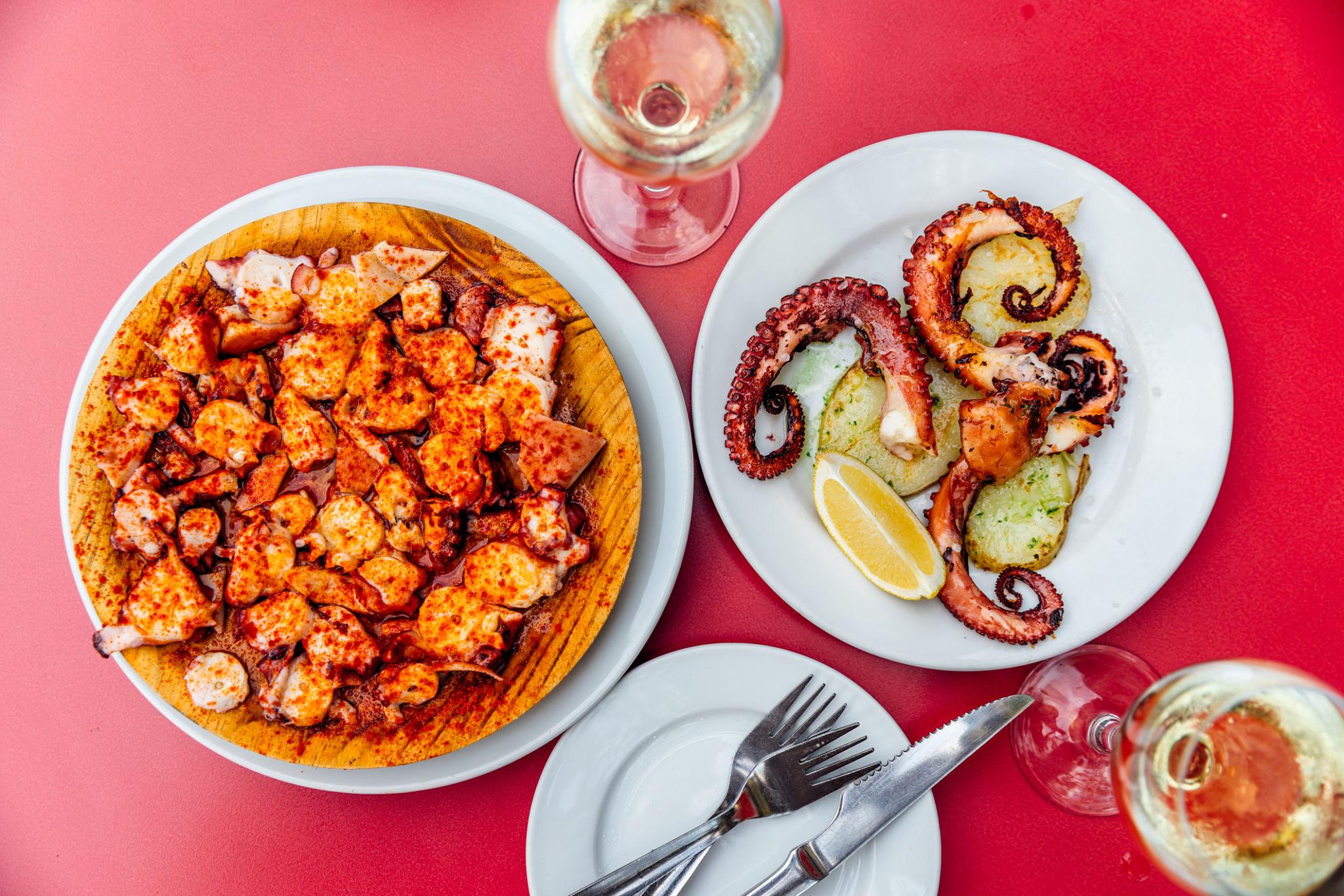
Galicia’s food culture is built entirely on the quality of what the sea and the land produce. The Rías Baixas are the most productive shellfish waters in Europe: mussels, clams, scallops, razor clams, percebes (goose barnacles clinging to Atlantic rocks), and octopus of a quality unavailable elsewhere. The fish markets of Santiago, Vigo, and A Coruña operate on a different scale from anywhere else in Spain. The correct response to all of this produce is minimal intervention: pulpo a feira is boiled octopus with olive oil, smoked paprika, and sea salt on a wooden board, and it is one of the finest dishes in the world. The Galician chefs who have built the region’s Michelin-starred restaurant scene understand this perfectly: the produce is the point.
2 Michelin Stars
Culler de Pau
Two Michelin Stars · O Grove, Rías Baixas · Chef Javier Olleros
In the coastal town of O Grove on the Rías Baixas — the finest restaurant in Galicia and one of the finest in Spain. Chef Javier Olleros and his family have been building a cuisine based entirely on local produce — with their own kitchen garden, connections to local farmers and fishermen, and an absolute commitment to sustainability — since 2009. Two Michelin stars since 2020. The tasting menu is closely tied to what the garden, the sea, and the season provide. Spectacular views of the estuary. Book several weeks in advance.
cullerdepau.com · O Grove, Pontevedra
1 Michelin Star
Casa Marcelo
One Michelin Star · Santiago de Compostela · Chef Marcelo Tejedor
Since 1999, Casa Marcelo has been the most original restaurant in Santiago — a fusion of Galician produce with Japanese, Peruvian, and Mexican techniques that sounds improbable and tastes extraordinary. Chef Marcelo Tejedor runs an open kitchen where the chefs double as waiters; the menu is fixed and changes every two weeks. The low-lit room with counter seating around the kitchen creates an intimacy rare for a starred restaurant. One of the most consistently celebrated restaurants in Galicia.
casamarcelo.net · Rúa das Hortas 1, Santiago de Compostela
Bib Gourmand
Abastos 2.0
Michelin Bib Gourmand · Mercado de Abastos, Santiago · Chefs Iago Pazos & Marcos Cerqueiro
The most exciting way to eat in Santiago — next to the Mercado de Abastos, where chefs Iago Pazos and Marcos Cerqueiro buy the freshest fish and produce every morning and arrive at the restaurant with an empty larder and a blank menu. The result is a daily changing, market-led menu that combines the Galician tradition with modern technique. Industrial-chic setting; casual and informal atmosphere. The menu changes weekly. Book well ahead — it fills daily throughout the season.
abastosdouspuntocero.es · Praza de Abastos, Santiago de Compostela
1 Michelin Star
Maruja Limón
One Michelin Star · Vigo · Chef Rafa Centeno
In Vigo — Galicia’s largest city and its seafood capital — Maruja Limón has been producing some of the most exciting cooking in the region since Rafa Centeno took over the kitchen. Contemporary Galician cuisine using local produce and innovative techniques: confit salt cod, roasted hake with lime mousseline, and a dessert philosophy that treats the sea and the land as equal sources of flavour. Part of the Nove group of chefs who have defined the modern Galician dining scene.
marujalimon.com · Vigo
Classic
O Gato Negro
Santiago de Compostela · Rustic · Authentic · Always busy
The old farmhouse tavern that pilgrims and locals have been eating in for decades — stone walls, pine tables, a fireplace, and dusty wine bottles. The pulpo con almejas al ajillo (octopus with clams in garlic sauce) is among the best in Santiago; the fresh fish arrives daily at market prices. The wine list leans heavily Galician. No reservations taken; arrive early or join the queue. The most authentic traditional eating in the old town.
Rúa da Troia 10, Santiago de Compostela · No reservations
On wine
Albaríño — the wine that belongs here and nowhere else
The Albaríño grape of the Rías Baixas produces white wines that are among the finest in Spain: aromatic, with citrus and stone fruit, a salinity that comes from the proximity to the Atlantic, and an acidity that cuts through the richest shellfish. Outside Galicia they are expensive and exported carefully. Inside Galicia they are poured by the jug in any good restaurant. The sub-regions of Salnes, Condado do Tea, and Rosal each produce distinctly different expressions; the best producers to seek out include Martín Códax, Pazo de Señorans, Do Ferreiro, and Forjas del Salnes. For red wine, the Mencía of Ribeira Sacra — from the canyon vineyards inland — is the correct companion to the region’s game and grilled meats.