Unfamous Places recommends
Three hundred people. Seventeen churches. Two miraculous islands floating in a fjord. Kotor is twenty minutes away and absorbs almost every visitor. Perast sits quietly.
Perast was once a proud maritime republic under Venetian protection, a town of sea captains and shipbuilders wealthy enough to commission seventeen churches for a population that could today fit in a single one of them. The Baroque palaces they built in honey-coloured limestone still stand along the waterfront — some perfectly preserved, some in various states of magnificent decay. The Bay of Kotor behind them is fjord-like: still, enclosed, ringed by steep karst mountains. There is no other town in the Adriatic quite like it.
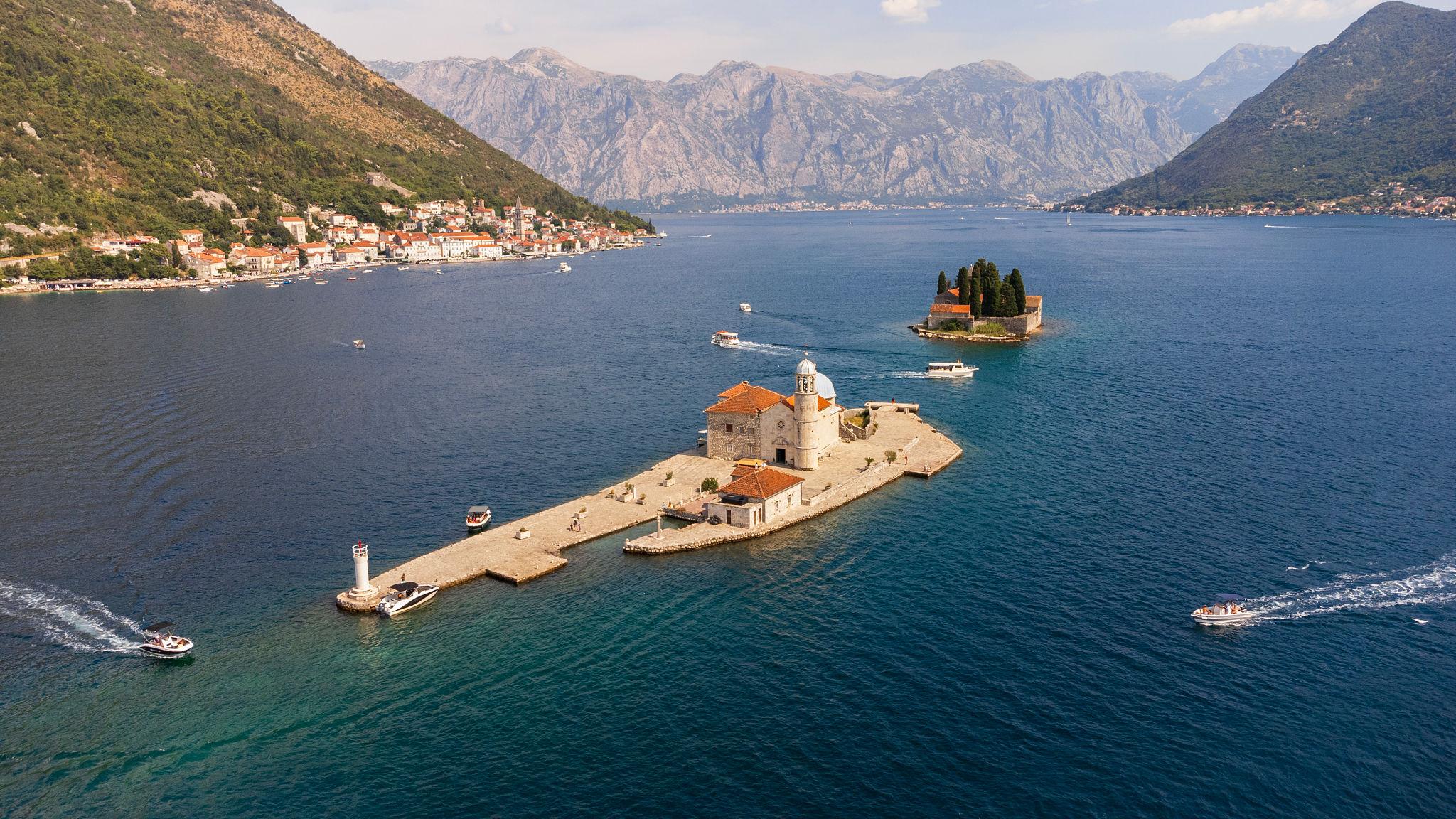
Four hundred metres from the Perast waterfront, two islands occupy the bay. St George — natural, covered in ancient cypress trees, home to a Benedictine monastery since the 12th century — is closed to tourists. Our Lady of the Rocks is man-made: sailors began dropping stones in the bay after a miraculous icon was found on a reef, and accumulated them over centuries until the reef became an island large enough to build a church. The church contains 2,500 votive silver plaques and 68 oil paintings. A water taxi from the Perast waterfront takes five minutes.
Kotor is UNESCO-listed, rightly famous, and during the summer months genuinely overrun with cruise ship day-trippers. It is twenty minutes away by car or bus. Perast absorbs almost none of that traffic — it is too small, too quiet, and too difficult to reach by the coach-load. Most people visit for an hour on the way to or from Kotor. Those who stay overnight discover something different: the bay at dawn, the promenade empty, the reflections of the palaces on water so still it looks like glass. Stay at least one night.
In the early 18th century, Peter the Great of Russia sent seventeen of his naval officers to Perast to be trained in seamanship by the town’s sea captains — the most respected in the Adriatic. The certificate they received was signed by the Perast captain Marko Martinović, whose name the main waterfront street still bears. That episode — the Russian tsar sending officers to a Montenegrin village of a few hundred souls for their naval education — says everything about what Perast once was. The palaces remain. The bay hasn’t changed.
Everything open, almost no tourists. The bay is warm enough to swim by late May. The palaces in the low morning light are extraordinary.
Peak quality. Warm, clear, manageable crowds. The day-trippers arrive but leave by early evening. Stay overnight and the village is yours.
The busiest months. Day-trippers from Kotor fill the promenade. Still beautiful, and still emptied by evening — but book accommodation months ahead.
The finest month. Warm sea, golden light, crowds gone. Restaurants still open. The bay in September is one of the best things in the Adriatic.
Most businesses close from mid-October to late April. Winter visits are possible but you will find much of the town shuttered. The shoulder seasons — May and September — are the times this guide most recommends.
Tivat Airport (TIV) has direct seasonal flights from London, Manchester, and European cities on easyJet, British Airways, and others. The quickest gateway to the Bay of Kotor. A taxi or hire car from Tivat to Perast takes twenty minutes.
Kotor is twenty minutes from Perast along the bay road. Buses run regularly between Kotor and Perast in season — the Blue Line is the most reliable. The bay road itself is one of the most scenic drives in the Balkans.
You cannot drive into Perast. Park at either end of the village by the main road and walk in (5–10 minutes, mostly flat). If staying at a hotel, confirm your arrival time in advance — most hotels send a golf cart to collect guests and their luggage from the parking area.
The walled medieval city twenty minutes away — UNESCO-listed, justifiably celebrated, and best seen early morning or late evening when the day-trippers are gone. Climb the fortress walls above the city for the finest view of the Bay of Kotor. Stay a night; don’t just pass through.
At the mouth of the Bay of Kotor — a town of layered Ottoman, Venetian, Spanish, and Austro-Hungarian architecture climbing from the waterfront to the fortress above. The mimosa festival in February makes it briefly famous; the rest of the year it is almost entirely unvisited by non-Balkan tourists.
Montenegro’s most popular coastal resort — a Venetian old town on a peninsula, good beaches, and a nightlife scene that draws visitors from across the region. The antithesis of Perast, and worth an afternoon for the contrast.
The mountain interior of Montenegro — Durmitor National Park, the Tara Canyon (one of the deepest in the world), and the Black Lake. A completely different country from the coast, and one of the most dramatic landscapes in south-east Europe.
Two hours north of Perast across the Croatian border — the most beautiful walled city on the Adriatic and now one of the most visited places in Europe. The crowds are real; the city is genuinely extraordinary. Arrive before 8am or after 6pm.
The largest lake in the Balkans — shared between Montenegro and Albania, ringed by mountains, home to pelicans and cormorants, and covered in water lilies in summer. The monasteries on the lake islands are among the most atmospheric in the region. Almost entirely without tourist infrastructure.