History
Guimarães — where Portugal was born
The UNESCO-listed historic centre of Guimarães contains the 10th-century castle from whose towers Afuído Henriques launched the campaign that created the Portuguese nation, the medieval Palácio dos Duques de Bragança (a vast 15th-century palace restored to its original state), and one of the finest collections of medieval streets, arcaded plazas, and painted townhouses in the country. Walk the Largo do Toural and the Rua de Santa Maria. Climb to the castle in the morning before the day-trippers from Porto arrive. Have dinner at A Cozinha. Sleep at the Pousada Mosteiro.
guimaraes.pt →
Nature
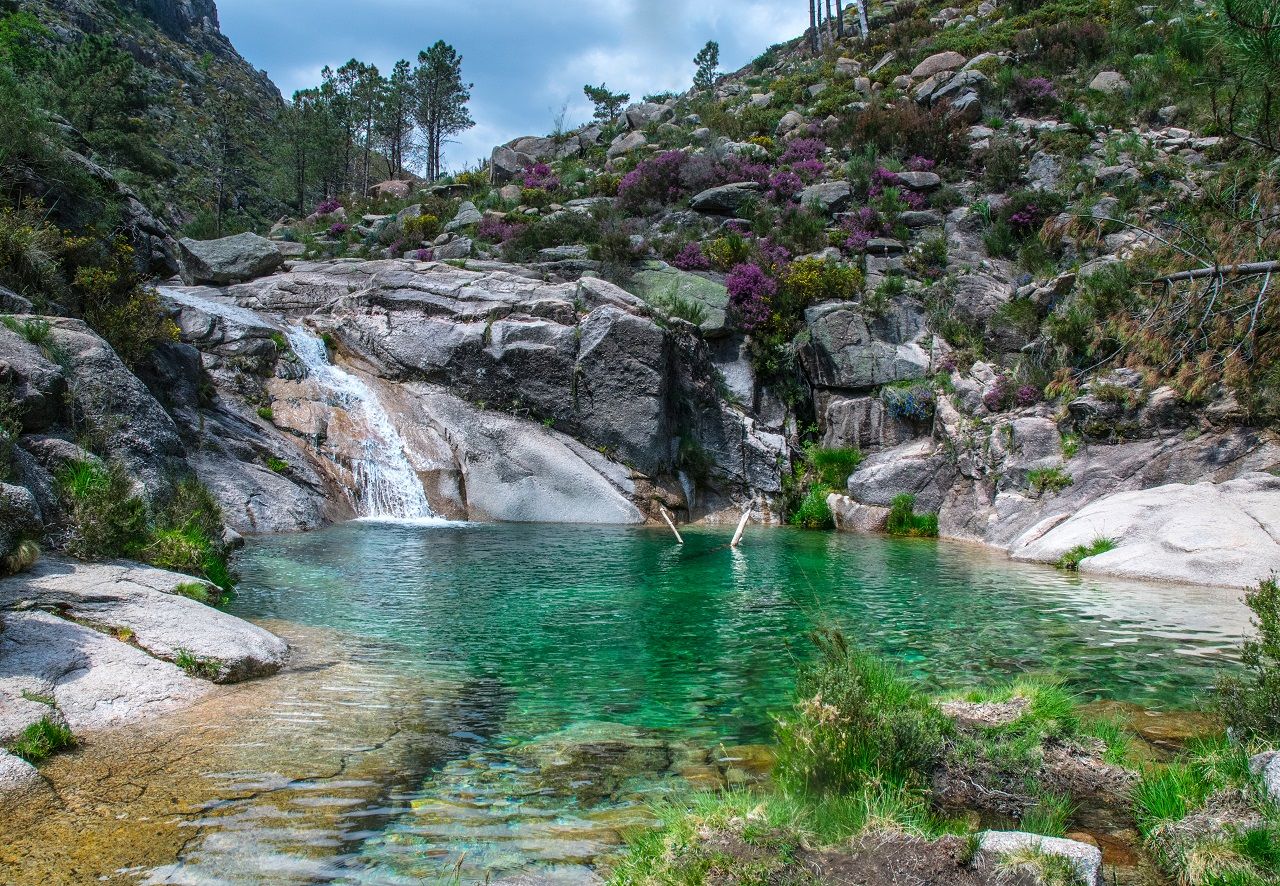
Peneda-Gerês — wolves, waterfalls, and granite
Portugal’s only national park — 70,000 hectares of granite massifs, ancient oak forests, glacial lakes, and mountain rivers with Iberian wolves, golden eagles, and wild Garrano ponies. The park straddles the border with Spain’s Ourense province. Hiking trails range from easy river walks to serious mountain routes; the best swimming in the Minho is in the park’s natural pools, carved into granite by glacial meltwater. The village of Lindoso has a Roman castro, a 13th-century castle, and an extraordinary grouping of espigueiros (granite grain stores on stilts) in the hillside above.
Best June–September. Park roads can be congested in August.
Peneda-Gerês park site →
History
Braga — the Portuguese Rome
The religious capital of Portugal — a city of extraordinary churches (the Sé de Braga, founded in 1070, is the oldest cathedral in the country), a university that keeps the city young and lively, and Bom Jesus do Monte: an 18th-century Baroque sanctuary on a hill above the city, reached by a staircase of 577 steps decorated with chapels, fountains, and figures representing the Stations of the Cross. The ascent takes forty-five minutes. The hydraulic funicular (1882, still working) takes three. The view from the terrace at the top is the finest in the Minho lowlands.
Braga city guide →
Culture
Ponte de Lima — the oldest town in Portugal
The Roman bridge crossing the Lima River to a medieval town on the north bank — fourteen arches spanning the river, first built in the 1st century AD and rebuilt and extended in the 14th. Ponte de Lima received its municipal charter in 1125, making it the oldest town in Portugal by that measure. The storks that nest on the bridge towers in spring return every year. The Lima Valley around it is the densest concentration of solares in the country — manor houses visible from the road, their vinho verde vineyards running down to the river. The Saturday market has been held here since 1125.
History
Citânia de Briteiros — an Iron Age city above Guimarães
A Celtic hill settlement above the Ave Valley, occupied from the 4th century BC until the Roman conquest and never fully abandoned until the 4th century AD — one of the best-preserved Iron Age sites in the Iberian Peninsula, with stone house foundations, paved streets, defensive walls, and a reconstructed roundhouse that conveys better than anything else what life before the Romans looked like in this corner of Europe. The site is eight kilometres from Guimarães by car and almost entirely unvisited by tourists despite being genuinely extraordinary.
Open daily. 8km from Guimarães by car.
Wine
Vinho verde estates — Alvarinho in Monção e Melgàço
The northernmost sub-region of the Minho, where the Alvarinho grape produces white wines that bear no resemblance to the vinho verde of the export market. Quinta de Soalheiro, Palácio da Brejoeira, and Provam are the names to seek out — all run tours and tastings from their estates on the Minho River, with views across to Spain. The Minho wine route connects them; a half-day exploring the estates of Monção e Melgàço is one of the finest wine experiences available in northern Portugal at any price point.
Tours available May–October. Book directly with the estates.