Unfamous Places recommends
The cleanest water in the Adriatic, a resident dolphin colony, Michelin-starred cooking in a pine forest, and a harbour town of Habsburg-era facades that looks like nobody told it the Austro-Hungarian Empire was over.
The rocky seabed around Lošinj means there is no sand to cloud the water. You can see straight to the bottom at depths where you normally can’t. Austria-Hungary understood this: the island was officially designated a health resort in 1892, drawing Habsburg royalty and the Viennese upper classes. The 2,600 hours of annual sunshine and the pine-scented air did the rest. The water hasn’t changed.
A long harbour of Habsburg-era facades, 7,000 residents, excellent restaurants, and almost none of the cruise-ship congestion that has overwhelmed the better-known Croatian destinations. The walk from one end of the harbour to the other takes twenty minutes and passes a dozen places worth stopping at. The old town behind it is quiet enough to get properly lost in.
The Lošinj archipelago is home to one of the most studied bottlenose dolphin populations in the Mediterranean. The Blue World Institute in Veli Lošinj has been monitoring the colony since 1987. Dolphin sightings from the ferry on arrival are common. Dedicated boat trips with trained naturalists run regularly in season and give you a genuine chance of a close encounter in open water.
Restaurant Alfred Keller at Boutique Hotel Alhambra in Čikat Bay is the benchmark for fine dining on the Croatian islands. Adriatic fish caught that morning, Kvarner scampi, lamb from neighbouring Cres, vegetables from the hotel’s rooftop garden. The setting — a Belle Époque villa deep in a pine forest above the sea — is unlike anything else available in Croatia.
April and May. The island smells of herbs and pine. Quiet, warm enough to swim from late May. Best for hiking.
June. Warm water, long days, restaurants at their best, none of the July–August crowds. The ideal month.
July and August are busy and hot. Book well ahead. The water is at its warmest — 26°C — and the evenings are long.
September and October. Warm enough to swim, empty beaches, lower prices. The best-kept secret on the island.
Jadrolinija runs a daily catamaran from Rijeka to Mali Lošinj. The most comfortable option and one of the most scenic ferry journeys in the Adriatic. Rijeka is served by flights from several European cities.
Take a car ferry from Brestova (near Rijeka) or Valbiska (Krk island) to Merag on Cres, then drive south through Cres and cross the canal at Osor. The drive through Cres is beautiful and worth the time.
Several buses a day link Zagreb and Mali Lošinj. By car, take the A6 to Rijeka then follow the coast. Lošinj Airport has seasonal flights from Zagreb, Venice, and Lugano in summer.
The island is easily explored by car. Mali Lošinj to Veli Lošinj takes ten minutes. The entire island can be driven end to end in thirty. Bikes and scooters are available to hire in Mali Lošinj.
Lošinj’s larger neighbour to the north — a wilder, emptier island with griffon vultures, ancient olive groves, and the beautiful town of Cres around its harbour. Far fewer visitors than Lošinj.
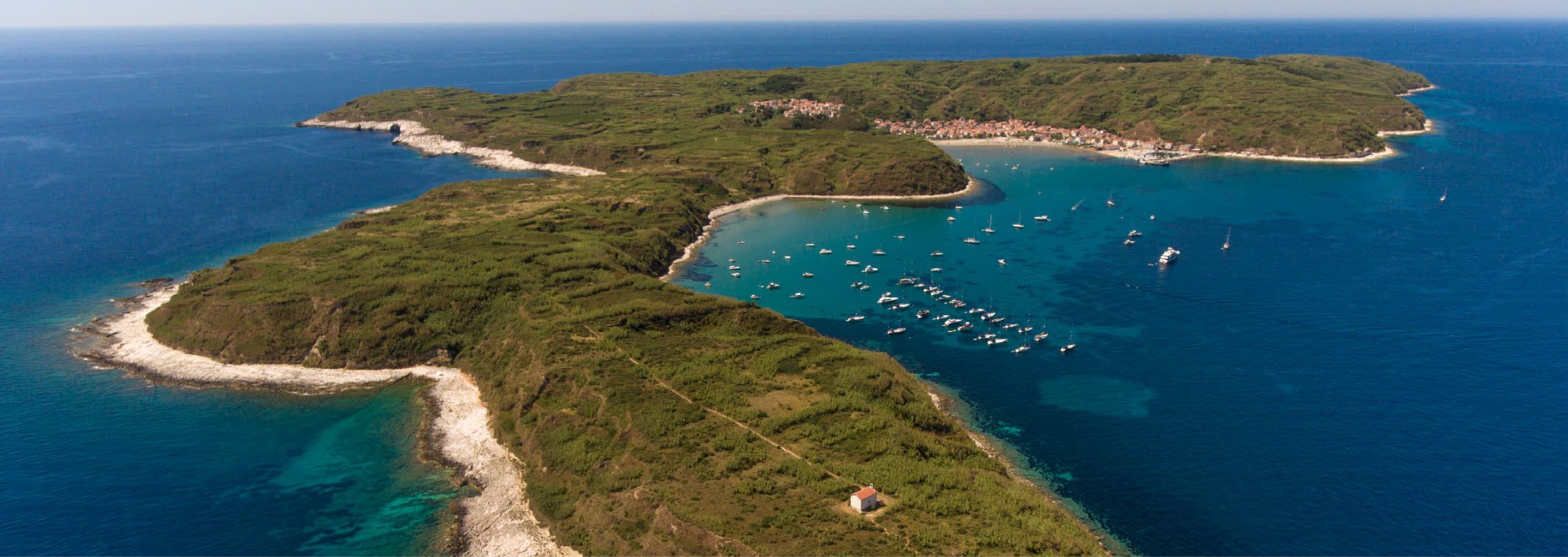
A tiny island south of Lošinj — one street, one restaurant, flowers covering every surface. Reachable by water taxi. Boats anchor in the harbour; day visitors arrive by morning and leave by afternoon.
A small island with no cars, 600 plant species, and a 17km walking trail through unspoiled Mediterranean scrubland. One of the most peaceful places in the Croatian Adriatic.
The underrated gateway city to the Kvarner region — a proper working port with excellent coffee culture, Art Nouveau architecture, and a food scene that has been quietly improving for a decade.
The most accessible Adriatic island — connected to the mainland by bridge — with a walled medieval town, good wine, and the island of Prvić just offshore.
The peninsula to the north — truffles, wine, hilltop towns, and the best restaurant scene in Croatia. Rovinj and Motovun are the unfamous choices within an already under-visited region.