New 2026
Vassen Street Food Market
Opening May 2026 in the Vassen area — an urban park built from repurposed shipping containers bringing together global street food, vintage shops, workshops, and events. The format is ambitious and the location, in what were former docklands, gives it the kind of rough-industrial setting that the best European street food markets have learned to use rather than resist. The sustainable city dish Gothenburg Royale was crowned the official Gothenburg meal in 2025; Vassen is where you’ll find it.
Opening May 2026. Check visitgoteborg.com for programme.
Outdoors
The Gothenburg Archipelago
Take tram line 11 from the city centre to Saltholmen — the end of the line — and board the ferry to Vrångö, Styrsö, or Brännö. No cars on any of the islands. Ferries run frequently throughout the day. The water is clean enough to swim. The herring is caught that morning. The island restaurants are serious. The population is a mix of year-round residents and Gothenburg families with summer cottages. One of the most underrated island-hopping experiences in northern Europe, and it takes thirty minutes to reach from the city centre.
Year-round. Summer for swimming; winter for the ferry journey itself.
Archipelago guide →
Culture
Saluhallen — the indoor market hall
Built in 1889, Gothenburg’s covered market hall on Kungstorget is one of the finest in Scandinavia — a cathedral of food with cast-iron columns, a glass roof, and stalls selling West Coast fish, Swedish charcuterie, artisan cheese, and the best-value lunch in the city. The fish counter in particular is worth the visit alone: sole, turbot, lobster, and crayfish depending on the season. Hotel Flora is a five-minute walk away; the combination of the two is the ideal Gothenburg morning.
saluhallen.com →
Culture
Haga — the wooden neighbourhood

The oldest neighbourhood in Gothenburg — low wooden houses dating from the 18th century, a high street of independent shops and cafés, and the cinnamon buns (kanelbullar) that have given Haga an outsized reputation among Swedish food tourists. The hagabulle is specifically the Haga version: significantly larger than standard. Walk through in the morning when the bakeries are at their warmest. Skånska Gruvan at the far end of Haga is the most famous; the queues form early.
Best on weekday mornings before the tourist crowds arrive.
Culture
Götaplatsen & Avenyn
The main boulevard of Gothenburg — a wide, tree-lined avenue that runs from the central train station area to Götaplatsen, where Carl Milles’ Poseidon fountain stands in front of the Art Museum. The Museum of Art (Konstmuseet) houses one of the finest collections of Scandinavian painting in the world, including the definitive collection of the Gothenburg Colourists. Free on Thursdays. The walk from one end of Avenyn to the other is thirty minutes and passes the city’s best outdoor terraces in summer.
Gothenburg Museum of Art →
Outdoors
Liseberg — and the Christmas market
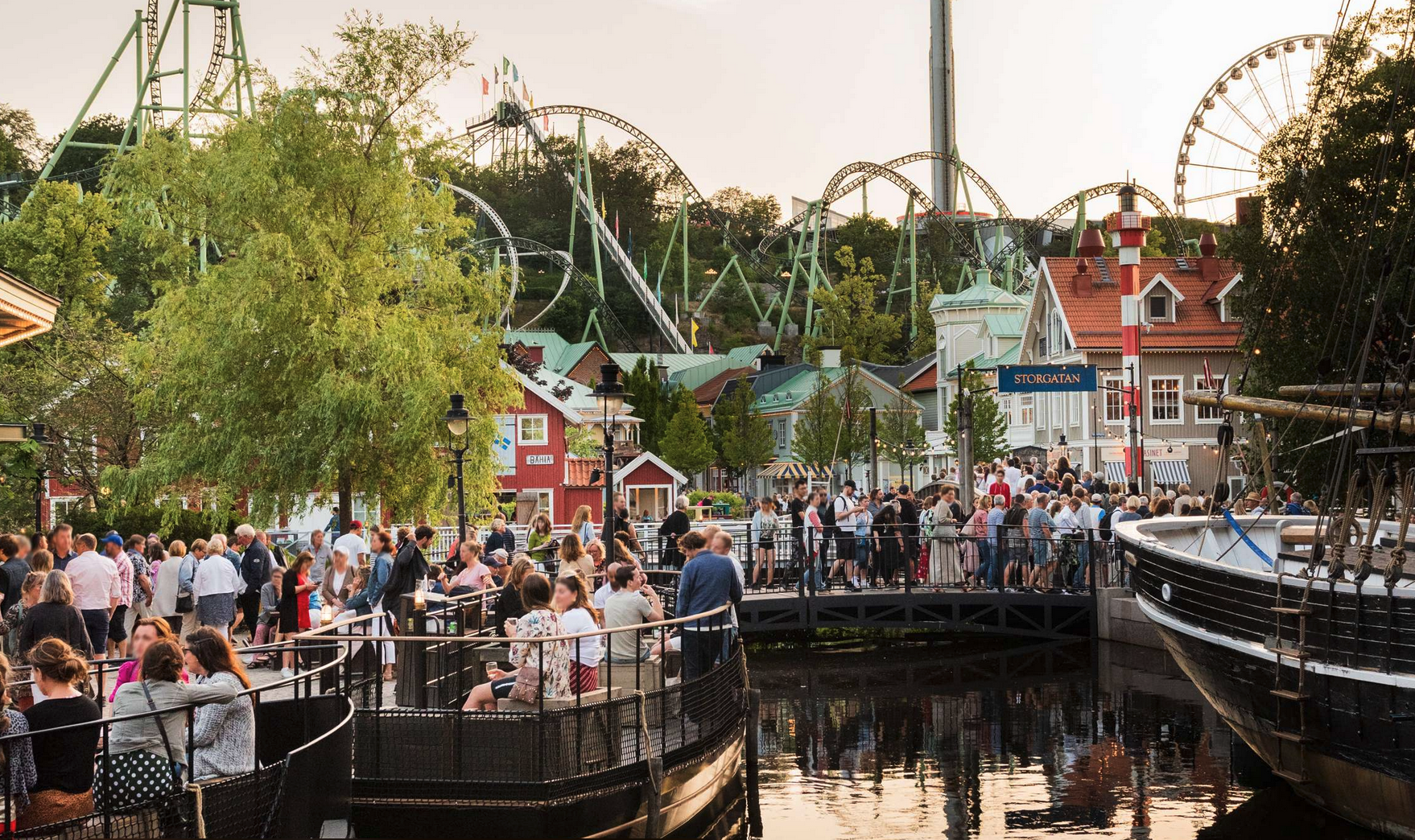
Liseberg is the most visited amusement park in Scandinavia and one of the best-designed in Europe — built into the hillside above Avenyn, with gardens that are worth visiting even without any interest in the rides. The summer season is the main event: concerts, food stalls from Gothenburg’s best restaurants, and the park lit up after dark. In December, Liseberg’s Christmas market is one of the finest in Sweden — five million lights, mulled wine, and the specific atmosphere of a Scandinavian winter fairground at its best.
Summer season May–September. Christmas market November–December.
liseberg.com →