Unfamous Places recommends
Sweden’s second city has three Michelin stars, the most exciting food scene in Scandinavia, a tram network, and an archipelago of 8,000 islands on its doorstep. Most visitors go to Stockholm instead.
Gothenburg has three Michelin-starred restaurants, a street food culture that has been quietly redefining Swedish cooking for a decade, and more new restaurant openings per capita than almost any city in northern Europe. The 2025–2026 wave alone brought over forty new restaurants, cafes and bars. Meanwhile, most international visitors go to Stockholm and eat at tourist traps near the Vasa Museum.
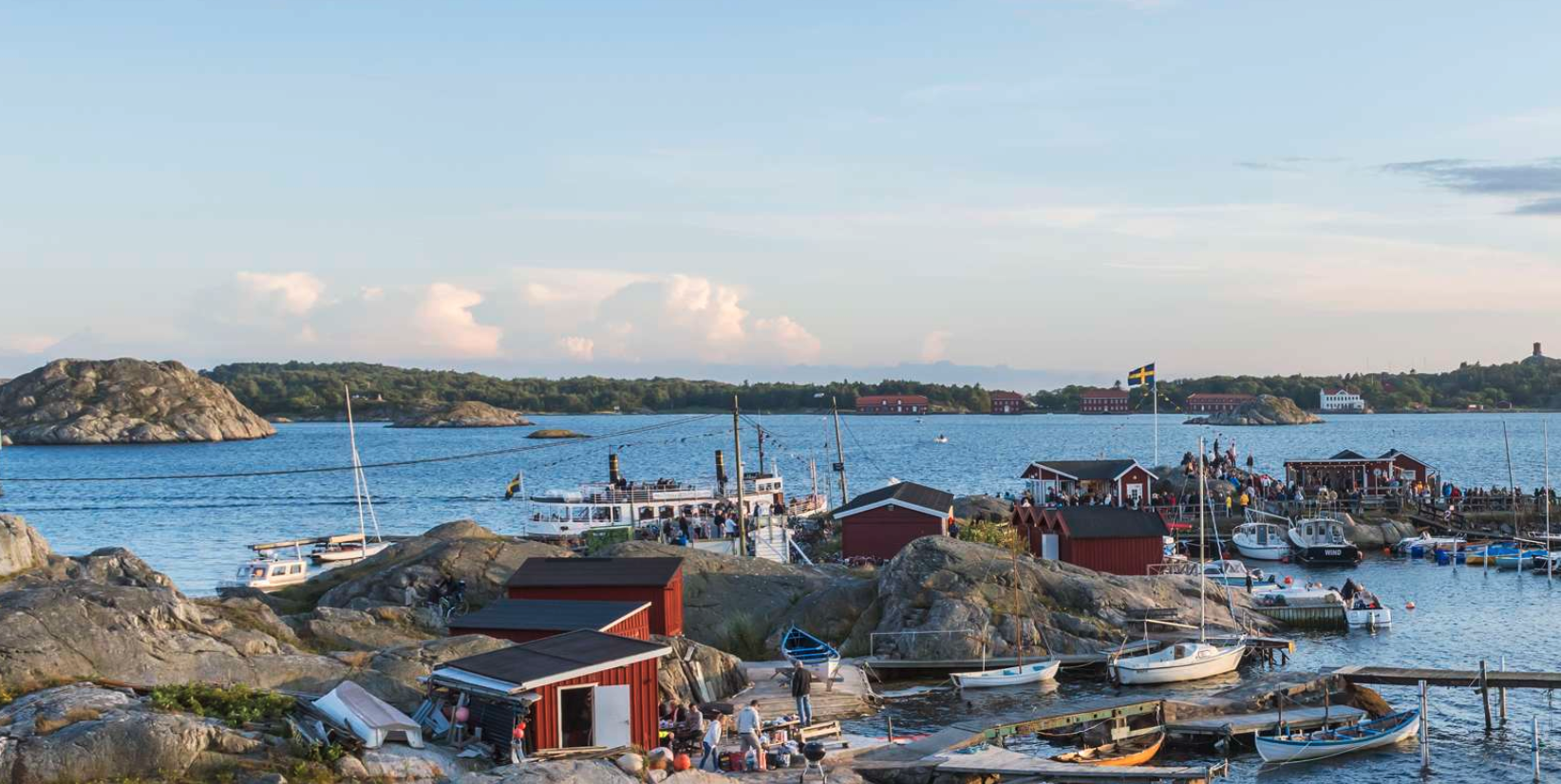
The Gothenburg Archipelago stretches thirty kilometres into the North Sea — 8,000 islands, rocks, and skerries, most of them uninhabited. Ferries from Saltholmen take you to Vrångö, Styrsö, and Brännö in under an hour. The islands have no cars. The water is clean enough to swim. The herring is caught that morning. This is the most underrated island-hopping in northern Europe.
Gothenburg was laid out by Dutch engineers in the 17th century and the canal grid shows it. The Haga district — wooden houses dating from the 18th century, cinnamon buns the size of your head, the best coffee in Sweden — is the oldest neighbourhood in the city. The tram network is one of the finest in Europe. The ochre Dutch-influenced warehouses along the Göta River are extraordinary in evening light.
Opening May 2026 in an urban park built from repurposed shipping containers: Vassen Street Food Market brings together global cuisine, workshops, vintage shops, and a programme of events that turns the former docklands into the best reason yet to visit the city. Gothenburg already had the food. Now it has a destination to match.
April and May. The city greens up, the terraces open, the archipelago ferries restart. A good time to visit before summer crowds.
June to August. Archipelago swimming, long evenings, the city at its most alive. Göteborgskalaset festival in August.
September and October. Quieter, golden light, the restaurant scene at full intensity. Good value and no queues.
December Gothenburg is one of Sweden’s finest Christmas cities. Liseberg’s Christmas market, glögg, and the dark Nordic atmosphere at its most beautiful.
Ryanair and SAS fly direct from London Stansted and London Heathrow to Gothenburg Landvetter (GOT). One of the most straightforward direct connections in northern Europe. The airport bus to the city takes 30 minutes.
The fastest trains on the Stockholm–Gothenburg line reach speeds of 200km/h and the journey takes as little as 2 hours 58 minutes. One of the great intercity rail routes in Scandinavia. Book in advance for the best fares on SJ.
Øresund trains connect Copenhagen to Gothenburg via Malmö. Cross the bridge, change at Malmö or travel through. A perfectly comfortable 3-hour journey that makes Gothenburg an easy extension to a Copenhagen trip.
The city centre is served by one of the finest tram networks in Europe — 13 lines, frequent service, and a single ticket that covers buses too. The archipelago ferries depart from Saltholmen, reached by tram line 11. Almost everything worth visiting in the city is reachable without a car.
8,000 islands stretching into the North Sea. Vrångö, Styrsö, Brännö — car-free, ferry-connected, herring-rich. The most underrated island experience in northern Europe and thirty minutes from the city by tram and ferry.
A car-free island north of Gothenburg with a 17th-century fortress, summer sailing culture, and the Marstrand’s Ocean Race. One of Sweden’s most beautiful island towns and surprisingly uncrowded outside peak summer.
South of Gothenburg: a small town with a good market and a coastline of granite rocks and sheltered inlets. The Kungsbacka Fjord is where Gothenburg locals swim in summer and kayak in autumn. Almost entirely unvisited by tourists.
Four hours by train. A natural pair with Gothenburg on a Scandinavian trip — fjords, Viking ships, and a food scene that is catching up fast. The train between them passes through genuinely beautiful countryside.
Three hours by train via Malmö. The most famous food city in Scandinavia, and justly so — but the prices are significantly higher than Gothenburg and the crowds significantly larger. Worth combining.
The forest province east of Gothenburg — lakes, glass-blowing studios, and the original IKEA in Älmhult. The Glasriket (Kingdom of Crystal) glass-blowing tradition is one of the most impressive craft heritages in Sweden.