Food & drink
The hotel where Eckart Witzigmann trained now has Alpine-French fine dining beside the waterfall. A farm-to-table restaurant in a Design Hotel. A highball bar that has become the social centre of the revival.
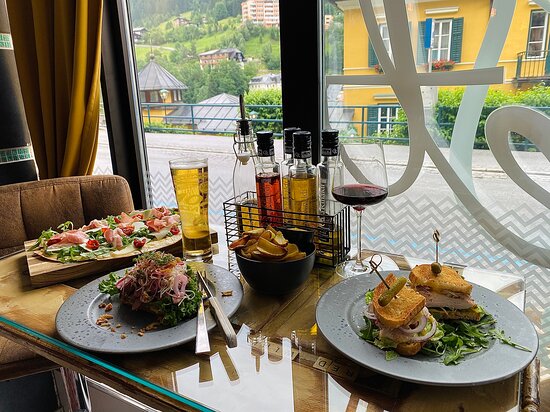
Bad Gastein’s restaurant scene has been transformed by the three hotel openings since 2021. Where there was once little beyond ski resort schnitzel, there is now a serious fine dining restaurant in the Straubinger Grand, a farm-to-table kitchen at the Comodo, and the long-established Alpine Urban Fusion at Haus Hirt. The Schlossbar at the Badeschloss has become the most talked-about bar in the Gastein Valley. The Viennese coffeehouse culture of the Straubinger Café makes the mornings civilised. The mountain huts above the ski area do the honest Austrian food that the grand hotels cannot quite replicate.
Straubinger Saal, Straubinger Grand Hotel
The restaurant of the Straubinger Grand Hotel occupies the historic Straubinger Hall — a room where emperors dined and a treaty was signed, now serving creative menus that blend Alpine roots with French sophistication. Executive Chef Norman Beitz cites Eckart Witzigmann (who trained here in an earlier incarnation of the hotel) as an inspiration. The Chef’s Table offers an intimate tasting experience with direct access to the kitchen and Beitz himself. The Straubinger Café adjoining it serves Viennese coffeehouse pastries with the sound of the waterfall as accompaniment.
arosahotels.co.uk · Straubingerplatz, Bad Gastein
Restaurant at The Comodo
The Comodo’s restaurant takes Bad Gastein’s Alpine larder seriously: dishes are constructed from locally produced and organic ingredients, with a kitchen philosophy that changes with what arrives from the farms. The aesthetic is urban and minimal; the cooking is warmer than the decor. The bar at the Comodo is the other social hub of the revival — good cocktails, a relaxed atmosphere, and the sense of being in a place whose moment is arriving. Open to non-residents.
Restaurant at Haus Hirt
The longest-established serious restaurant in Bad Gastein — Haus Hirt’s kitchen has been serving what it calls Alpine Urban Fusion since the hotel’s redesign by architect Ike Ikrath: slow food, locally sourced, with an unusually large selection of vegetarian and vegan options for an Austrian alpine restaurant. The braised lamb with croquettes is the signature dish among the meat options. The overhang terrace from which you can hear the waterfall is the finest outdoor dining spot in the town.
Schlossbar at Hotel Badeschloss
The bar that has become the social centre of the Bad Gastein revival — highball cocktails in a setting that references the town’s historic spa culture without recreating it. The Schlossbar is where the new Bad Gastein mixes with the old: the people who have always been here, the ones who have just discovered it, and the design community that has made the Gastein Valley a talking point in European architecture circles. Open to non-residents. Come at 7pm and stay.
Mountain huts on the Stubnerkogel and Graukogel
The mountain huts above the ski area and hiking trails serve the honest Austrian food that the grand hotel restaurants have moved beyond: Gulasch, Kaiserschmarrn (the shredded pancake dessert with plum jam that is the definitive Austrian mountain experience), Tiroler Gröstl (a pan of potatoes, meat, and onions that you will only fully appreciate after six hours of skiing), and locally brewed beer or Glühwein in winter. Walk to one for lunch. The views from the huts above the Gastein Valley, with the Belle Époque facades of the town visible below, are extraordinary.
Seasonal: winter skiing and summer hiking season.
Austria produces wine that most visitors never try because most visitors go to the Alps rather than the wine regions. The Straubinger Grand’s wine list draws from Styria (Sauvignon Blanc and Morillon of real quality), the Wachau (Grüner Veltliner and Riesling from the Danube valley), and Burgenland (Blaufränkisch reds). Ask for Austrian wine and expect to be surprised. Genuss-Schnaps — the fruit brandies of the Salzburg region, made from locally grown plums, pears, and apples — are what to drink in the mountain huts. And then there is the Gasteiner mineral water itself — from the same springs as the thermal baths, bottled, still and sparkling, and genuinely good.