Things to do
Megalithic stones older than Stonehenge, a medieval village above Europe’s largest artificial lake, wine estates open to visitors, and an Atlantic coast nobody talks about.
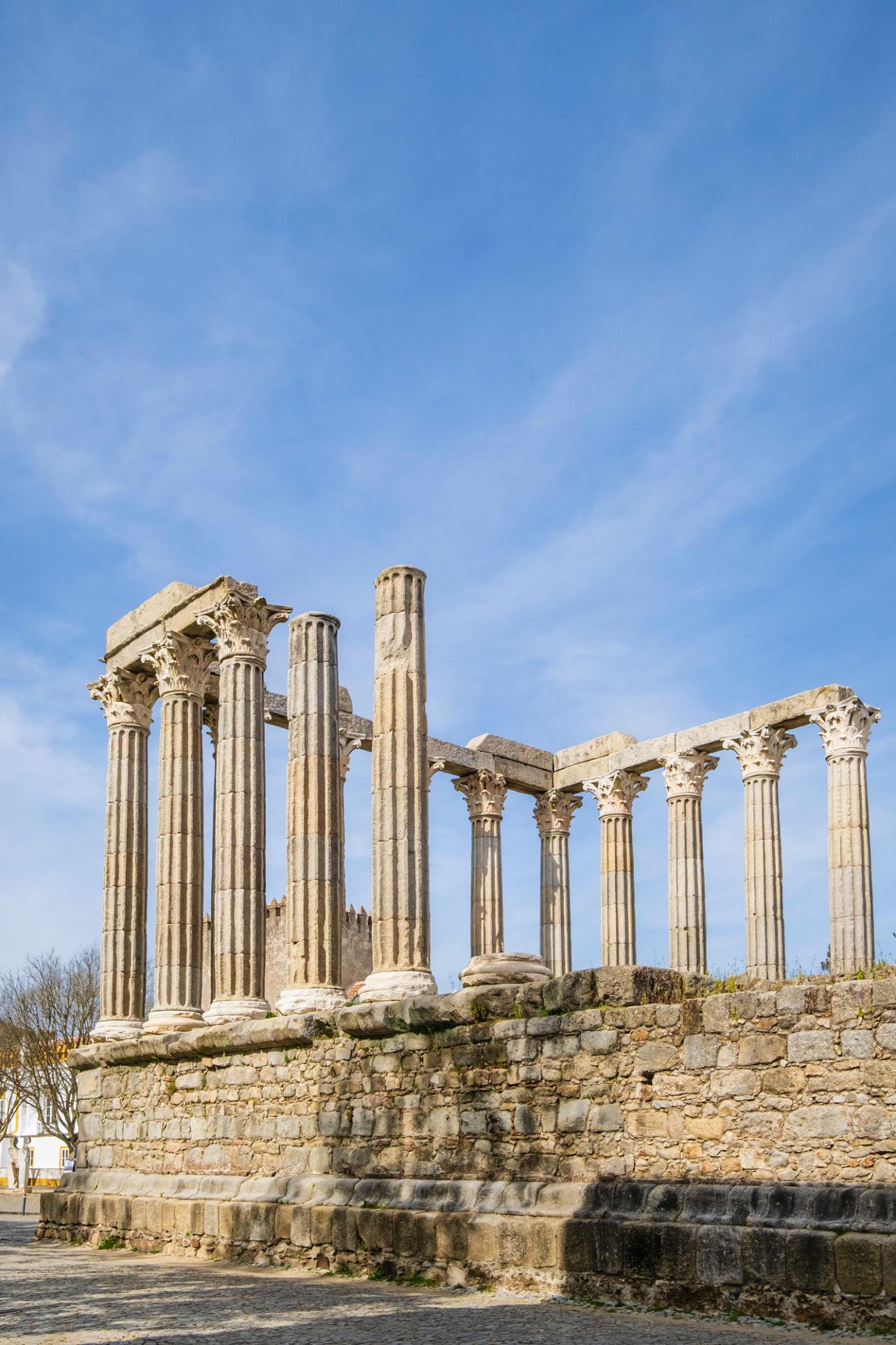
The UNESCO-listed capital of the Alentejo contains a Roman temple (1st century AD, remarkably complete), a 12th-century Gothic cathedral, the macabre and extraordinary Chapel of Bones (built from the remains of 5,000 monks and inscribed with the words “We bones that are here await yours”), and a medieval quarter small enough to walk in a morning. The Praça do Girãldo is one of the finest central squares in Portugal. Spend at least one night — not one afternoon.
Évora tourist information →A perfectly preserved medieval walled village on a hilltop above the Alqueva reservoir — Europe’s largest artificial lake. The village has a castle, a church, a single street of whitewashed houses, and views in every direction across the plain. The reservoir below has become a dark-sky destination; the lack of light pollution makes the stars here among the most spectacular in southern Europe. Stay overnight if you can.
Best at dawn or dusk. Night sky tours available from São Lourenço do Barrocal.
The Alentejo Wine Route connects dozens of estates open to visitors. Esportão (Reguengos de Monsaraz) is the most internationally famous and runs excellent guided tours. Cartuxa (near Évora) is smaller and more intimate. João Portugal Ramos (Estremoz) has a remarkable portfolio. Tiago Cabaço is worth seeking out for a more personal experience. Most require advance booking. A wine tasting at an Alentejo estate — with the vineyards visible from the tasting room — is one of the defining experiences of a visit to southern Portugal.
Book an Esportão visit →The Évora district alone contains more than 100 isolated menhirs, close to 800 dolmens, and around 450 megalithic settlements — one of the highest concentrations of prehistoric monuments in Europe. The Cromlech of Almendres (17km from Évora) is a stone circle predating Stonehenge by 2,000 years. The Anta Grande do Zambujeiro nearby is one of the largest megalithic chambers in Europe. Few visitors make the effort to find them. That is part of their extraordinary quality.
Hire a guide in Évora or drive independently with a GPS. The sites are not well signposted.
The 100-kilometre Atlantic coastline between Setúbal and the Algarve border has never been significantly developed. Comporta is the most fashionable — rice fields, storks nesting on rooftops, unspoiled beaches, and a restaurant scene that has no right to be this good this far from the city. Melides is quieter and home to Vermelho, Louboutin’s hotel. Vila Nova de Milfontes further south is the most beautiful town on the coast. None of these are on most international visitors’ itineraries.
Best May to October. Avoid July and August at Comporta if possible.
Every Saturday morning the central square of the marble town of Estremoz fills with local farmers, cheese-makers, and antique dealers selling Alentejo produce and Portuguese curiosities. The market is legendary among those who know it and almost entirely unvisited by tourists. The town itself — built largely of local marble, with footpaths lined with marble offcuts — is one of the most distinctive in the region. Have lunch at Mercearia Gadanha. Visit Howard’s Folly for wine afterwards.
Saturday mornings only. Arrive before 10am for the full market.