Unfamous Places recommends
One third of Portugal. Almost no tourists. Cork oaks, olive groves, megalithic stones older than Stonehenge, and the wine that is quietly redefining what Portugal makes.
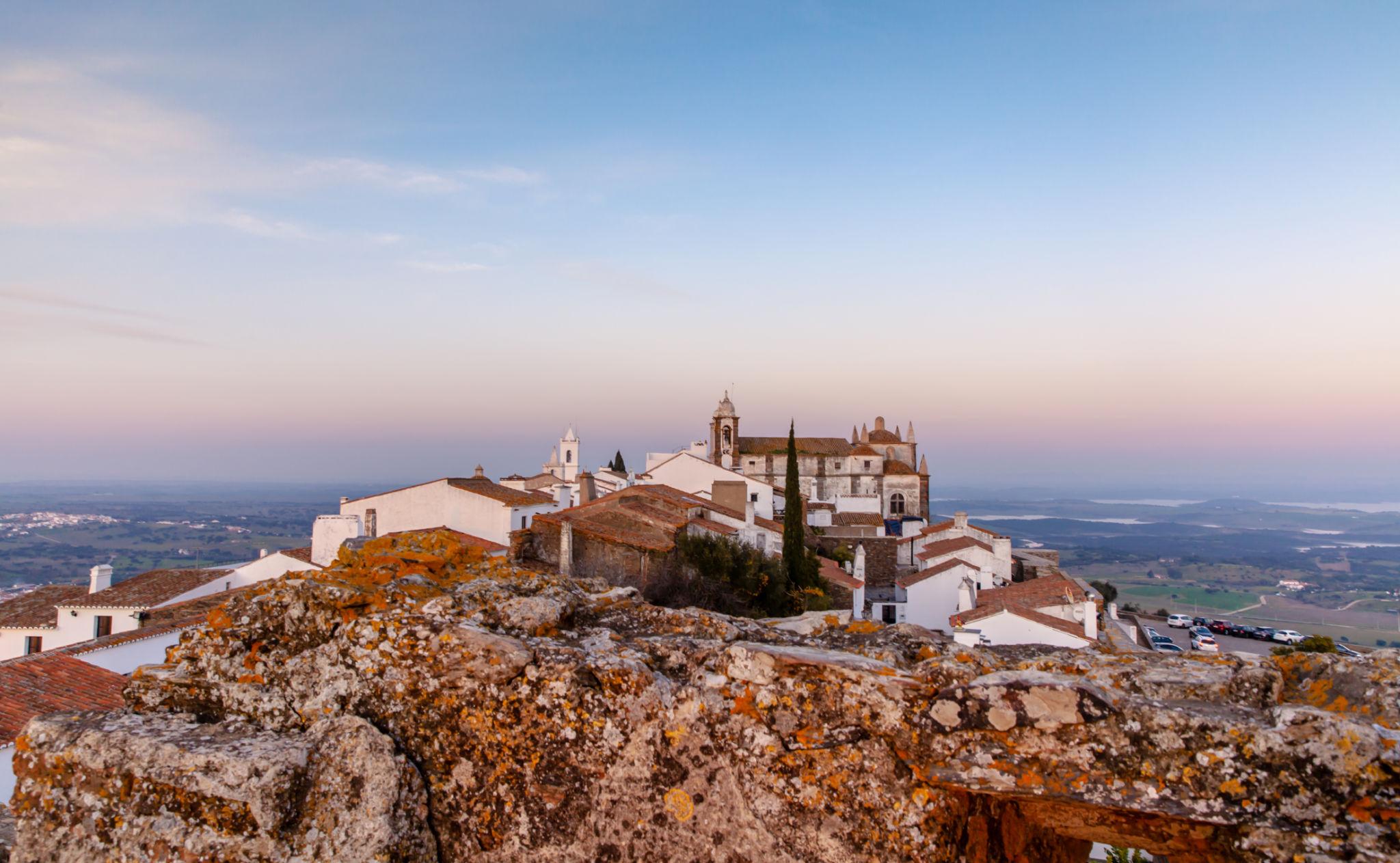
The Alentejo covers 33% of Portugal’s territory and holds about 5% of its population. The landscape is extraordinary — cork oaks, olive groves, golden plains that stretch to the horizon under a sky so large it feels like a different country from the coast. The roads are quiet. The villages are whitewashed and intact. Two hours from Lisbon, you might be the only visitor in town.
The capital of the Alentejo is a UNESCO World Heritage city whose medieval walls contain a Roman temple, a Gothic cathedral, a 16th-century Chapel of Bones, and some of the best restaurants in Portugal. It is small enough to walk end to end in thirty minutes and interesting enough to stay three days. Most people do a day trip from Lisbon. That is a mistake.
The Alentejo produces 40% of Portugal’s wine on 8% of its vineyard land. The estates here — Esportão, Cartuxa, Herdade da Malhadinha Nova — are serious, internationally respected, and still remarkably affordable. Several have become some of the most beautiful places to stay in southern Europe. The wine route connects them; a car makes it practical.
The Alentejo coast runs 100 kilometres between Setubal and the Algarve border. It faces full Atlantic weather and it has never been developed. Comporta has rice fields, storks, and a hotel by Christian Louboutin. Melides is quieter still. Vila Nova de Milfontes has cliffs. None of these places are on most people’s itineraries. They should be.
March to May. Wild flowers, mild temperatures, green plains. The most beautiful the Alentejo will ever look. The ideal time to visit.
July and August reach 47°C in places. Go early, stay indoors by noon, drink cold wine. The coast is better than inland.
September to November. Harvest season, lower prices, golden light on cork oaks. The wine estates are at their most active.
Cool, quiet, and cheap. The Saturday market at Estremoz. Fires in the restaurants. A genuinely good time to be here.
The A6 motorway connects Lisbon to Évora directly. The train from Lisbon Oriente takes 1 hour 45 minutes. Beyond Évora, a car is essential — public transport in the Alentejo is almost nonexistent.
The most direct route is south via the A1 and then the A6. A long drive but an easy one. Consider breaking the journey in Évora and continuing to the coast the following day.
Fly into Lisbon (LIS) — direct flights from most UK airports on TAP, Ryanair, and easyJet. Pick up a hire car at the airport and drive straight to the Alentejo. Do not stay in Lisbon on the first night.
A hire car is not optional in the Alentejo. It is the only practical way to reach the wine estates, hilltop villages, and coastal towns. Portuguese roads are good. Driving is straightforward. Book a car with a full tank policy to avoid inflated refuelling charges.
The green north — vinho verde country, medieval towns, the Douro valley. As different from Alentejo as a country can be from itself. Worth combining on a longer Portugal trip.
The coast that Lisbon’s sophisticated visitors escape to — rice fields, storks, unspoiled Atlantic beaches, and a restaurant scene that has no right to be this good this far from the city.
The romantic mountain town outside Lisbon — fairy-tale palaces, Atlantic views, and forests. A day trip from Lisbon on the way to or from Alentejo.
The Spanish continuation of the Alentejo landscape — equally vast, equally empty, with Roman ruins at Mérida and Trujillo’s extraordinary Renaissance square. Barely visited by non-Spanish tourists.
A walled border town above the Guadiana River, marked by the Romans, Visigoths, and Moors. Its Islamic Festival brings it briefly to life; otherwise it is one of the quietest and most atmospheric towns in Portugal.
The finest town on the Alentejo coast — a small whitewashed settlement on a headland above the Atlantic, with a castle, a river estuary, and clifftop beaches that remain almost entirely unvisited.