There are no restaurants in the conventional sense. There are kitchens.
The Lesachtal does not have restaurant strips, tourist menus, or apres-ski bars. It has farmhouse kitchens that cook dinner for their guests, a handful of guesthouse restaurants that serve the valley’s traditional dishes, and the Almwellness Tuffbad for those who want a menu card. The food in those kitchens — prepared from ingredients that were alive last week within a kilometre of the table — is exceptional. This is not a hardship. It is the point.
The food culture of the Lesachtal is built on altitude, isolation, and centuries of necessity. The valley floor is at 1,100–1,400 metres — a height at which the growing season is short, the winters are long, and the food that survives both of those facts is the food that is worth cooking. Rye and buckwheat rather than wheat. Fermented dairy rather than fresh. Smoked and cured meat rather than grilled. The result is a cuisine of extraordinary depth that has been largely bypassed by the food media because nobody thought to look this far into the mountains.
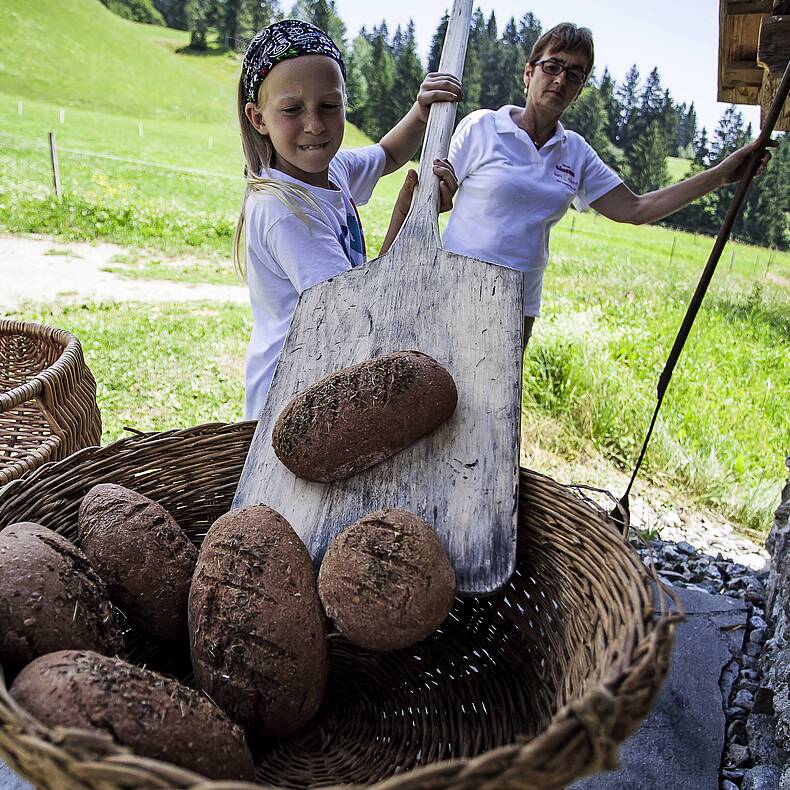
The bread is the foundation. The Lesachtaler Brot — dense, dark, sour, with a crust that resists the knife — is made from rye flour and a sourdough starter that in some families has been maintained for generations. It is baked in wood-fired stone ovens at irregular intervals; a family might bake once a month, producing enough loaves to last. The UNESCO inscription acknowledges not just the bread itself but the entire practice: the cultivation of the rye, the maintenance of the starter, the baking technique, and the communal dimension of the bread festivals where the valley comes together around the ovens.
After the bread come the dumplings. Kasnudeln — large half-moon pasta filled with a mixture of potato, fresh cheese (Topfen), and mountain herbs — is the defining dish of Carinthia, and the Lesachtal version uses dairy that has no equivalent in the lowlands. The cheese is fresh from the farm, the herbs from the surrounding meadows. Eat them with butter and chives. Order a second portion. The Kaspressknödel — cheese dumplings pressed flat and fried, served in soup or with sauerkraut — are the winter version of the same impulse.
Dishes to know
Lesachtaler Brot
Dense rye sourdough, UNESCO-listed, baked in wood-fired stone ovens. The crust is dark and hard; the crumb is moist, sour, and keeps for weeks. Buy it at the September Bread Festival or at the farm shop in Maria Luggau. It is unlike any other bread in Austria.
Kasnudeln
The definitive Carinthian dish — large half-moon pasta dumplings filled with potato, Topfen (fresh cheese), and mountain herbs, boiled and served with melted butter and chives. Order them everywhere. They are never the same twice because the cheese is never the same twice.
Sterz
A fried buckwheat or cornmeal dish — simple, filling, centuries old. Served as a side dish or as a meal in itself. The buckwheat version (Heidensterz) is the traditional Carinthian staple: nutty, slightly bitter, unfussy. The kind of food that makes sense at altitude in winter.
Schlipfkrapfen
A variation on the Carinthian dumpling tradition — smaller, with a different filling (often potato and cottage cheese with fresh herbs), typically served in butter or in soup. The family recipe varies by village. Ask which filling your guesthouse prefers.
Speck & local charcuterie
The cured meats of the Lesachtal region are outstanding — air-dried, smoked, and produced on farms that have been doing it the same way for generations. Buy some at the farm shop in Maria Luggau or at the Bread Festival. They are the ideal trail snack.
Alpine dairy — milk, butter, cheese
The cheese and butter from farms in the Lesachtal are made from the milk of cows that spend the summer at altitude on herb-rich meadows. The flavour is entirely different from lowland dairy. Ask your farm stay hosts what is homemade. Accept everything they offer.
On drink
Schnapps, valley water, and the herb garden at Mühlenstüberl
The fruit schnaps of the Lesachtal — made from the plums, pears, and apples of the valley floor — are as serious as any in Carinthia. Accept a small glass at the end of dinner at any guesthouse and expect something with genuine character. The spring water in the valley is drinkable directly from mountain streams above the farming areas. Simone Matouch runs herb tours from the Mühlenstüberl in Liesing every Tuesday morning in summer, followed by a tasting of her own herb products — call +43 650 8830657 to register. The brewery culture of the valley is thin; the nearest good beer comes from Carinthia’s craft breweries in Hermagor and Klagenfurt. What the Lesachtal does well with drink is the same as what it does well with food: local, simple, made by someone you can meet.